Budgeting for US Designers: Navigating 2026 Creative Costs
The Cost of Creativity: Budgeting for Emerging US Designers in a 2026 Economy
The year is 2026, and the creative landscape for emerging designers in the United States is more dynamic and competitive than ever. While the allure of bringing innovative ideas to life remains strong, the practicalities of managing finances can often be daunting. For aspiring and early-career designers, understanding and mastering their financial health is paramount to not just surviving, but thriving. This comprehensive guide will delve into the intricacies of budgeting for US designers, offering actionable strategies, foresight into economic trends, and practical advice to ensure your creative vision is financially sustainable.
Our focus today is on helping you navigate the evolving costs associated with a design career, ensuring that your passion for creativity is matched by sound financial planning. We’ll explore everything from essential software subscriptions to marketing your brand, all through the lens of a 2026 economic outlook. Let’s dive into how to effectively manage your design budget 2026.
Understanding the Evolving Creative Economy in 2026
The creative economy is a vibrant and ever-changing ecosystem. For emerging US designers, 2026 presents both exciting opportunities and unique challenges. Digital transformation continues to accelerate, with AI and automation playing increasingly significant roles in design processes. This shift impacts everything from the tools designers use to the skills they need to cultivate, all of which have financial implications. The gig economy is maturing, offering flexibility but also demanding strong self-management and financial discipline from freelancers and independent contractors. Understanding these macro trends is the first step in formulating a robust design budget 2026.
Advertisements
Key Economic Factors Affecting Designers
- Inflationary Pressures: While hopefully stabilized, inflation can still impact the cost of software, hardware, and even living expenses. Your budget must account for potential price increases.
- Technological Advancements: New software, AI tools, and hardware upgrades are constant. Deciding when and what to invest in can significantly affect your budget.
- Gig Economy Growth: More designers are working independently, necessitating a focus on business expenses, self-employment taxes, and benefits.
- Market Demand Shifts: Certain design niches may see higher demand (e.g., UX/UI for AI applications, sustainable design), influencing earning potential and required skill investments.
- Global Competition: The ease of remote work means US designers might compete with talent from around the globe, impacting pricing strategies.
These factors underscore the need for a dynamic and adaptable design budget 2026. It’s not a static document but a living financial plan that evolves with the market and your career.
Building Your Foundational Design Budget 2026
Creating a solid budget is not about restricting your spending, but about empowering your financial decisions and ensuring your creative career is sustainable. For emerging designers, this foundational budget should cover both personal living expenses and professional operational costs. Separating these two is crucial for clarity and tax purposes, especially if you’re freelancing or running a small studio.
Personal Living Expenses
Before you even think about design-related costs, you need to ensure your personal needs are met. This includes:
- Housing: Rent/mortgage, utilities (electricity, water, internet).
- Food: Groceries, dining out.
- Transportation: Car payments, public transport, ride-sharing.
- Healthcare: Insurance premiums, out-of-pocket medical expenses. This is a significant consideration for self-employed individuals.
- Debt Repayment: Student loans, credit card debt.
- Personal Care: Clothing, toiletries, haircuts.
- Savings: Emergency fund, retirement contributions. This should be a non-negotiable line item, even if it’s small to start.
- Discretionary Spending: Entertainment, hobbies, travel.
Having a clear picture of your personal burn rate is essential. It dictates how much you need to earn from your design work to cover your basic needs before reinvesting in your business. This forms the bedrock of your design budget 2026.
Professional Operational Costs
Now, let’s break down the specific costs associated with being an emerging designer in 2026. These are the investments that enable your creative output and business growth.
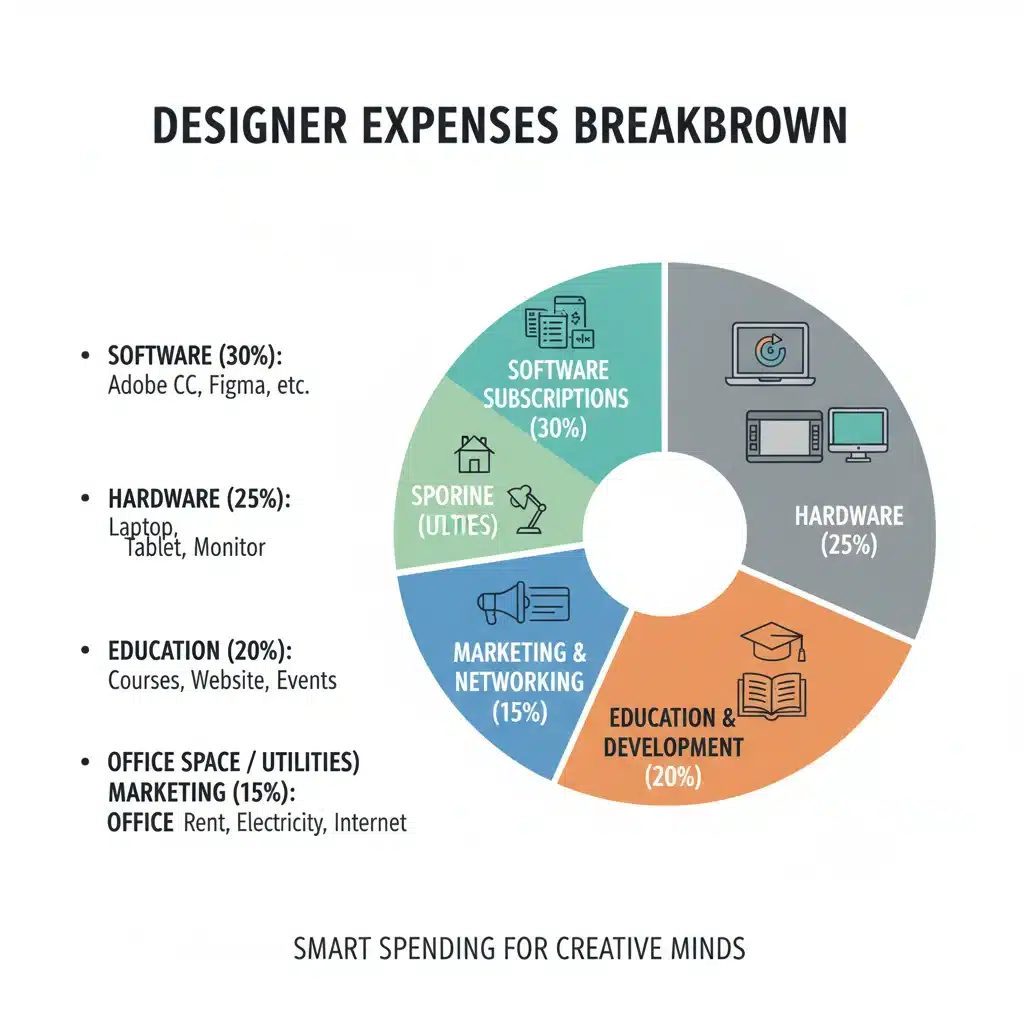
- Software & Subscriptions: Adobe Creative Cloud, Figma, Sketch, Notion, project management tools, AI design assistants. Many operate on a subscription model, so these are recurring monthly or annual costs.
- Hardware: High-performance computer, graphics tablet, monitor, external hard drives, backup solutions. These are often significant upfront investments that need to be budgeted for upgrades every few years.
- Education & Skill Development: Online courses (Coursera, Udemy, Domestika), workshops, conferences, books. Staying current with design trends and technologies is vital.
- Marketing & Branding: Website hosting, domain name, portfolio platform subscriptions, social media advertising, professional photography.
- Networking & Community: Memberships to design organizations, attending local meetups, professional events.
- Office Supplies & Studio Space: If you work from home, this might be minimal, but if you rent a co-working space or studio, it’s a significant cost.
- Legal & Accounting: Business registration fees, contract templates, tax preparation services. Essential for freelancers.
- Insurance: Professional liability insurance (E&O) for freelancers, especially if working on high-stakes projects.
- Contingency Fund: Always allocate a percentage (5-10%) of your budget for unexpected expenses or lean months.
Carefully itemizing these expenses will give you a clear understanding of your professional overhead. This is a critical component of your design budget 2026, allowing you to set appropriate pricing for your services.
Strategic Investments and Cost-Saving Measures for 2026
With a clear understanding of your costs, the next step is to strategize. Where should you invest for maximum impact, and where can you trim expenses without compromising quality or growth? The 2026 landscape offers new opportunities for both.
Smart Software and Hardware Investments
- Prioritize Essential Tools: Don’t subscribe to every tool under the sun. Identify the core software you absolutely need for your niche and skill set. Many tools offer free tiers or student discounts.
- Open-Source Alternatives: Explore robust open-source software like GIMP (image manipulation), Inkscape (vector graphics), or Blender (3D modeling) as alternatives to expensive proprietary options, especially when starting out.
- Leasing vs. Buying: For high-end hardware, consider leasing options or financing plans that spread out the cost, rather than a large upfront payment.
- Cloud Computing & Storage: Leverage cloud services for scalability and collaboration, often with tiered pricing models that allow you to pay for what you use.
- AI Integration: Invest in learning and potentially subscribing to AI-powered design tools that can automate repetitive tasks, improving efficiency and freeing up your time for more creative work. This is a crucial investment for a forward-thinking design budget 2026.
Effective Skill Development & Education
- Free Resources: Utilize the wealth of free tutorials on YouTube, design blogs, and community forums.
- Strategic Course Selection: Instead of signing up for numerous courses, identify specific skill gaps that will directly enhance your marketability or efficiency. Look for certifications that hold industry value.
- Mentorship: Seek out experienced designers for mentorship. Their guidance can be invaluable and often comes at a lower cost than formal education, or even free through community initiatives.
Lean Marketing and Networking
- Organic Social Media: Focus on building a strong organic presence on platforms relevant to your target audience. Content creation (blog posts, case studies, process videos) can attract clients without direct ad spend.
- Referral Programs: Encourage satisfied clients to refer new business, potentially offering a small incentive.
- Online Portfolio Optimization: Ensure your portfolio is impeccably designed, easy to navigate, and showcases your best work. This is your primary marketing tool.
- Targeted Networking: Attend industry-specific online and offline events where your ideal clients or collaborators are present. Quality over quantity.
Managing Studio and Operational Overheads
- Home Office Deduction: If you work from home, understand the tax deductions available for home office expenses in the US.
- Co-working Spaces: Consider flexible co-working memberships instead of dedicated office leases, offering amenities and networking opportunities without the full cost.
- Batching Tasks: Group similar tasks (e.g., administrative, invoicing, marketing) to improve efficiency and reduce time spent on non-billable work.
- Outsourcing Non-Core Tasks: If certain tasks (e.g., complex accounting, web development for your portfolio) consume too much of your time and aren’t your core competency, consider outsourcing them to specialists. This can be a cost-effective solution in the long run, allowing you to focus on design.
Every dollar saved or strategically invested contributes to the robustness of your design budget 2026, allowing you to allocate resources where they matter most for your growth.
Forecasting Income and Setting Pricing in 2026
Budgeting isn’t just about tracking expenses; it’s equally about forecasting income and setting appropriate pricing for your services. This is especially challenging for emerging designers who might be unsure of their market value. In 2026, transparency and value-based pricing are becoming increasingly important.
Income Forecasting Strategies
- Historical Data: If you have some client history, analyze your past earnings. Identify busy and slow periods.
- Pipeline Analysis: Keep track of potential projects in your pipeline. Assign probabilities to each lead to get a more realistic income projection.
- Client Retainers: Aim for retainer clients where possible. These provide a stable, recurring income stream, making income forecasting much easier.
- Diversify Income Streams: Don’t rely on a single client or type of project. Explore passive income opportunities like selling digital assets, templates, or offering workshops.
- Market Research: Understand the current rates for designers with similar skill sets and experience in your region and niche.
Setting Your Design Rates
Your rates need to cover your expenses (personal and professional), allow for savings, and provide a profit margin. Don’t undervalue your work!
- Cost-Plus Pricing: Calculate your total monthly expenses (personal + professional). Then, determine how many billable hours you can realistically work in a month. Divide total expenses by billable hours to get your minimum hourly rate. Add a profit margin.
- Value-Based Pricing: This is often preferred for more experienced designers. Instead of charging for time, you charge based on the value your design brings to the client’s business (e.g., increased conversions, improved brand perception). This requires excellent communication and understanding of client goals.
- Project-Based Pricing: Offer fixed prices for specific projects. This gives clients clarity and allows you to be rewarded for efficiency. Break down the project into phases and estimate time for each.
- Tiered Packages: Offer different service tiers (e.g., basic, standard, premium) to cater to various client budgets and needs.
Remember to factor in self-employment taxes (around 15.3% for Social Security and Medicare in the US, plus income tax) when setting your rates. Many emerging designers overlook this crucial aspect, leading to financial surprises. A well-constructed design budget 2026 explicitly accounts for taxes.
Managing Cash Flow and Financial Health in a Dynamic Economy
Cash flow is the lifeblood of any business, especially for freelancers and small studios. Even with a well-planned budget, poor cash flow can lead to significant stress. In 2026, with fast-paced projects and sometimes delayed payments, proactive cash flow management is essential.
Key Cash Flow Strategies
- Upfront Deposits: Always require an upfront deposit (e.g., 25-50%) before starting any project. This helps cover initial expenses and shows client commitment.
- Milestone Payments: For larger projects, break them into milestones with payments due at the completion of each. This ensures a steady flow of income as the project progresses.
- Clear Payment Terms: Clearly state your payment terms (e.g., ‘Net 15’ or ‘Net 30’) on your invoices. Follow up promptly on overdue invoices.
- Emergency Fund: Build and maintain an emergency fund that can cover at least 3-6 months of your personal and professional expenses. This is your buffer against slow periods or unexpected costs.
- Separate Business Accounts: Keep your personal and business finances strictly separate. This simplifies accounting, tax preparation, and gives you a clearer picture of your business’s financial health.
- Automate Savings: Set up automatic transfers to your savings accounts (emergency, tax, retirement) each time you get paid. ‘Pay yourself first.’
Tools for Financial Management
Leverage technology to simplify your financial tracking:
- Accounting Software: Tools like QuickBooks Self-Employed, FreshBooks, or Wave Accounting can help you track income and expenses, generate invoices, and prepare for taxes.
- Budgeting Apps: Personal finance apps (e.g., Mint, YNAB) can help you manage your personal spending and integrate with business accounts for a holistic view.
- Time Tracking Software: Crucial for project-based billing and understanding your efficiency. Toggl, Clockify, or Harvest are popular options.
Regularly review your financial statements. Are you sticking to your design budget 2026? Are there areas where you’re consistently over or under budget? Adjust as needed.
Preparing for the Future: Long-Term Financial Planning for Designers
An effective design budget 2026 isn’t just about the current year; it’s a stepping stone to long-term financial security and growth. As an emerging designer, thinking about retirement, investments, and scaling your business might seem premature, but laying the groundwork now is crucial.

Retirement and Investments
- IRA/Roth IRA: For self-employed individuals, these are excellent options for tax-advantaged retirement savings.
- SEP IRA/Solo 401(k): If your income grows significantly, these plans allow for much higher contribution limits.
- Diversified Investments: Once your emergency fund is robust and retirement contributions are consistent, explore other investment avenues like index funds or ETFs to grow your wealth.
Scaling Your Design Business
- Reinvesting Profits: As your business generates profit, strategically reinvest a portion back into growth – perhaps hiring an assistant, investing in advanced software, or expanding your marketing efforts.
- Intellectual Property: Consider monetizing your intellectual property through digital products, courses, or licensing your designs.
- Building a Team: If your workload becomes consistently overwhelming, budgeting for contractors or employees can be a smart move to scale your output and take on larger projects.
Contingency Planning and Risk Management
- Disability Insurance: As a self-employed individual, your income is directly tied to your ability to work. Disability insurance can provide a safety net if you’re unable to perform your design duties.
- Professional Liability Insurance: Protects you against claims of negligence or errors in your professional services.
- Succession Planning: While it might seem far off, thinking about what would happen to your business if you were suddenly unable to work is a wise long-term strategy.
By integrating these long-term financial goals into your annual design budget 2026, you’re not just planning for the present, but actively building a resilient and prosperous future for your creative career.