
Mastering Content Creation: Advanced Strategies for Digital Success
In the ever-evolving digital landscape, content is no longer king; it’s the entire kingdom. Effective content creation strategies are the bedrock of any successful digital marketing endeavor, dictating not just visibility but also engagement, conversions, and ultimately, brand loyalty. This comprehensive guide delves deep into advanced content creation strategies, moving beyond the basics to equip you with the knowledge and tools to craft truly impactful and memorable content. We’ll explore how to understand your audience on a profound level, leverage cutting-edge tools, optimize for search engines, and distribute your content effectively to achieve unparalleled digital success.
The sheer volume of information available online means that merely creating content is insufficient. To stand out, your content must be exceptional, relevant, and strategically placed. It needs to resonate with your target audience, provide genuine value, and subtly guide them through their customer journey. This isn’t a task for the faint of heart, but with the right approach and a commitment to continuous improvement, mastering content creation becomes an achievable and highly rewarding goal.
From developing a robust content plan to measuring its impact, every step in the content creation process is crucial. We’ll cover everything from ideation and research to writing, editing, and promotion, ensuring that by the end of this article, you’ll have a holistic understanding of what it takes to dominate your niche with superior content.
Advertisements
Understanding Your Audience: The Foundation of Stellar Content Creation Strategies
Before you even type your first word, the most critical step in any content creation strategy is to deeply understand your audience. Who are you trying to reach? What are their pain points, desires, and aspirations? What kind of language do they use? Answering these questions goes beyond basic demographics; it requires constructing detailed buyer personas.
Developing Comprehensive Buyer Personas
Buyer personas are semi-fictional representations of your ideal customers, based on market research and real data about your existing customers. They include details like:
- Demographics: Age, gender, income, location, occupation.
- Psychographics: Interests, hobbies, values, attitudes, lifestyle.
- Goals and Challenges: What are they trying to achieve? What obstacles do they face?
- Information Sources: Where do they get their information? (e.g., social media, blogs, news sites, forums).
- Preferred Content Formats: Do they prefer videos, long-form articles, infographics, podcasts, or short social media posts?
- Objections: What might prevent them from engaging with your content or purchasing your product/service?
Creating 2-3 detailed personas can significantly refine your content creation strategies, ensuring every piece of content speaks directly to a specific segment of your audience. This personalized approach fosters deeper connections and higher engagement.
Leveraging Data for Audience Insights
Don’t rely solely on assumptions. Utilize analytics tools (Google Analytics, social media insights, CRM data) to gather concrete data about your audience’s behavior. Look at:
- Top-performing content: What topics resonate most? What formats get the most shares or comments?
- Traffic sources: Where are your visitors coming from? This can inform your distribution strategy.
- On-site behavior: Which pages do they visit? How long do they stay? What’s their bounce rate?
- Search queries: What keywords are they using to find your site? This is invaluable for SEO.
Data-driven insights ensure your content creation strategies are built on solid ground, leading to more effective and efficient content production.
Strategic Keyword Research and SEO Integration
Even the most brilliant content will flounder without visibility. Integrating SEO from the very beginning of your content creation process is non-negotiable. This involves meticulous keyword research and strategic on-page optimization.
Beyond Basic Keywords: Semantic SEO and Topic Clusters
Modern SEO has evolved past simply stuffing keywords. Google’s algorithms are increasingly sophisticated, understanding context and user intent. This calls for a shift towards:
- Semantic SEO: Focus on topics rather than just individual keywords. Identify related terms, synonyms, and long-tail keywords that provide a comprehensive answer to a user’s query.
- Topic Clusters: Organize your content around broad ‘pillar’ pages that cover a core topic extensively, supported by numerous ‘cluster’ content pieces that delve into specific sub-topics. These cluster pages link back to the pillar page, signaling its authority to search engines. This structure not only improves SEO but also enhances user experience by providing a clear information hierarchy.
A robust content creation strategy considers the entire user journey and how different pieces of content can interlink to provide maximum value and authority.
On-Page Optimization Best Practices
Once you’ve identified your target keywords and topic clusters, ensure your content is optimized:
- Compelling Title Tags and Meta Descriptions: These are your first impression in search results. Make them enticing and keyword-rich.
- Header Tags (H1, H2, H3): Structure your content logically with clear headings that incorporate keywords where natural.
- High-Quality Content: This is paramount. Google prioritizes content that is informative, well-written, and genuinely answers user questions.
- Internal and External Linking: Link to other relevant pages on your site (internal linking) and to authoritative external sources.
- Image Optimization: Use descriptive alt text and optimize image file sizes for faster loading.
- Mobile Responsiveness: Ensure your content looks and functions perfectly on all devices.
These practices are fundamental to any effective content creation strategy aimed at achieving high search rankings.
Crafting Engaging and Valuable Content Formats
The medium is often as important as the message. Diversifying your content formats can significantly broaden your reach and cater to different audience preferences. An advanced content creation strategy embraces a multi-format approach.
Beyond Blog Posts: A Multifaceted Approach
While blog posts remain a cornerstone, consider these other high-impact formats:
- Video Content: Tutorials, interviews, behind-the-scenes, webinars. Video is highly engaging and dominates many platforms.
- Infographics and Visuals: Complex data becomes easily digestible and shareable.
- Podcasts: Offer an accessible way for audiences to consume content on the go.
- E-books and Whitepapers: Long-form, in-depth content that establishes authority and can be used for lead generation.
- Interactive Content: Quizzes, polls, calculators, and interactive maps increase engagement and data collection.
- Case Studies and Testimonials: Powerful social proof that builds trust and credibility.
Each format serves a different purpose and can appeal to various stages of the customer journey. Strategically integrating these into your content creation strategies will maximize your impact.
Storytelling: The Heart of Connection
Regardless of the format, compelling storytelling is what truly captivates an audience. Humans are wired for stories. Incorporate narratives, anecdotes, and emotional appeals into your content to make it more relatable and memorable. Show, don’t just tell. Illustrate how your product or service solves a problem through a real-world scenario. This human touch elevates your content creation strategies from informative to inspiring.

Leveraging AI and Automation in Content Creation
The advent of Artificial Intelligence (AI) has revolutionized the content creation landscape. While AI won’t replace human creativity, it can significantly enhance efficiency and effectiveness when integrated into your content creation strategies.
AI-Powered Content Generation and Optimization Tools
AI tools can assist with various aspects of content creation:
- Content Ideation: AI can analyze trends, search queries, and competitor content to suggest new topic ideas.
- Drafting and Outline Generation: AI writers can generate initial drafts, headlines, and outlines, saving significant time.
- SEO Optimization: AI tools can analyze your content for keyword density, readability, and suggest improvements for higher search rankings.
- Grammar and Style Checks: Advanced AI proofreading goes beyond basic grammar, offering stylistic suggestions to improve clarity and impact.
- Content Repurposing: AI can help transform a blog post into social media captions, video scripts, or email snippets.
It’s crucial to remember that AI is a co-pilot, not an autopilot. Human oversight and editing are essential to ensure authenticity, accuracy, and a unique brand voice. The goal is to augment your content creation strategies, not to automate them entirely.
Automation for Efficiency
Beyond AI, consider automating repetitive tasks in your content workflow:
- Social Media Scheduling: Tools like Buffer or Hootsuite allow you to schedule posts in advance.
- Email Marketing Automation: Set up drip campaigns to deliver content to subscribers at optimal times.
- Content Calendar Management: Use project management tools (Asana, Trello) to keep track of content ideas, deadlines, and team assignments.
- Analytics Reporting: Automate the generation of performance reports to quickly identify what’s working and what’s not.
Automating these processes frees up valuable time, allowing your team to focus on the creative and strategic aspects of content creation strategies.
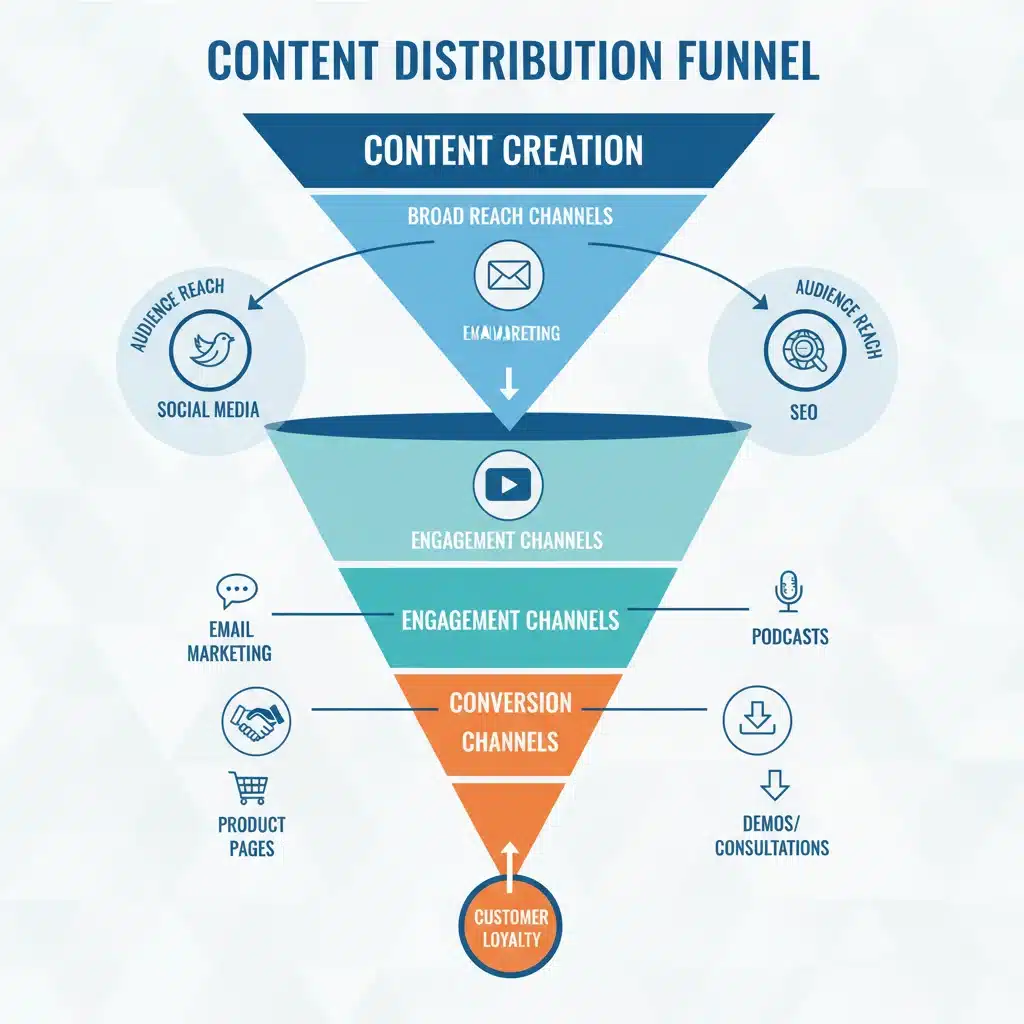
Effective Content Distribution and Promotion
Creating amazing content is only half the battle; getting it in front of the right eyes is the other. A robust content distribution strategy is as vital as the creation itself.
Multi-Channel Distribution
Don’t limit your content to just one platform. A truly effective content creation strategy involves a multi-channel approach:
- Organic Search (SEO): As discussed, this is foundational for long-term visibility.
- Social Media: Tailor your content for different platforms (LinkedIn for B2B, Instagram for visuals, TikTok for short videos).
- Email Marketing: Your subscriber list is a highly engaged audience. Nurture them with exclusive content and updates.
- Paid Promotion: Social media ads, search engine marketing (SEM), and native advertising can amplify your reach.
- Influencer Marketing: Collaborate with influencers in your niche to tap into their established audiences.
- Content Syndication: Repurpose and publish your content on other reputable sites (with proper attribution) to expand your audience.
- Online Communities: Share your content in relevant forums, Reddit communities, or Facebook groups where your target audience congregates.
Each channel requires a slightly different approach to maximize engagement. Understanding these nuances is key to advanced content creation strategies.
Repurposing and Atomizing Content
To maximize the return on your content investment, learn to repurpose and atomize. A single piece of long-form content can be broken down into:
- Multiple social media posts.
- An infographic.
- A short video or animated explainer.
- Podcast snippets.
- Email newsletter sections.
- Quotes for visual graphics.
This approach ensures that your core message reaches a wider audience across various platforms, extending the lifespan and impact of your content without constantly creating new material from scratch. This smart use of resources is a hallmark of sophisticated content creation strategies.
Measuring and Analyzing Content Performance
Content creation is not a set-it-and-forget-it endeavor. Continuous measurement and analysis are crucial for refining your content creation strategies and ensuring ongoing success.
Key Performance Indicators (KPIs) for Content
What metrics should you track? It depends on your goals, but common KPIs include:
- Traffic: Page views, unique visitors, time on page.
- Engagement: Comments, shares, likes, bounce rate, scroll depth.
- Conversions: Lead generation (form fills, downloads), sales, subscriptions.
- SEO Performance: Keyword rankings, organic traffic, backlinks acquired.
- Brand Awareness: Mentions, social media reach, direct traffic.
Define your KPIs clearly at the outset of any content campaign. This allows you to objectively assess the effectiveness of your content creation strategies.
A/B Testing and Iteration
Don’t be afraid to experiment. A/B test different headlines, calls to action (CTAs), image choices, and even content formats to see what resonates best with your audience. Use the data from your analysis to iterate and improve. Content creation is an ongoing cycle of creating, publishing, promoting, measuring, and refining. This iterative process is what distinguishes good content creation strategies from great ones.
Building Authority and Trust Through Thought Leadership
Beyond direct marketing, content serves a vital role in establishing your brand as a thought leader in your industry. This builds trust, credibility, and long-term loyalty, which are invaluable assets.
Original Research and Data-Driven Insights
One of the most powerful ways to demonstrate thought leadership is through original research, surveys, and proprietary data analysis. When you publish unique insights that no one else has, you become a go-to source for information. This type of content is highly shareable, generates backlinks naturally, and positions you as an innovator. Integrating original research into your content creation strategies elevates your brand above competitors.
Expert Interviews and Collaborative Content
Bring in external voices of authority. Interview industry experts, collaborate with complementary businesses on joint reports, or feature guest posts from recognized leaders. This not only enriches your content but also expands your network and exposes your brand to new audiences. Such collaborations are a sophisticated element of advanced content creation strategies.
Consistent Voice and Brand Story
Maintain a consistent brand voice and narrative across all your content. This helps in building a recognizable identity and fosters a stronger connection with your audience. Every piece of content should reflect your brand’s values and mission, reinforcing your unique position in the market. A cohesive brand story woven through your content creation strategies ensures that every interaction strengthens brand perception.
Staying Ahead: Future Trends in Content Creation
The digital world is constantly changing, and so must your content creation strategies. Keeping an eye on emerging trends ensures you remain relevant and competitive.
The Rise of Interactive and Experiential Content
As audiences become more discerning, passive consumption is giving way to active participation. Interactive quizzes, polls, augmented reality (AR) experiences, virtual reality (VR) tours, and personalized content pathways are becoming increasingly important. These formats offer deeper engagement and more memorable experiences, making them powerful additions to future content creation strategies.
Ethical AI and Transparent Content Practices
While AI is a powerful tool, the conversation around ethical AI use in content is growing. Transparency about when and how AI is used in content creation will become crucial for maintaining trust with your audience. Brands that are open and honest about their use of AI, while emphasizing human oversight and value, will build stronger relationships.
Hyper-Personalization at Scale
Leveraging data to deliver highly personalized content experiences will move beyond simple name insertions in emails. Think dynamic content that adapts in real-time based on user behavior, preferences, and journey stage. This level of personalization, powered by AI and robust data analytics, will be a game-changer for sophisticated content creation strategies.
Voice Search Optimization
With the proliferation of smart speakers and voice assistants, optimizing content for voice search is becoming more important. This means focusing on natural language, conversational keywords, and providing direct, concise answers to common questions. Adapting your content creation strategies for voice will unlock new avenues of discoverability.
Conclusion: The Continuous Journey of Content Creation Mastery
Mastering content creation strategies is not a destination but a continuous journey of learning, adapting, and innovating. It demands a deep understanding of your audience, a commitment to SEO best practices, a diverse approach to content formats, strategic use of technology like AI, and robust distribution channels. Crucially, it requires constant measurement and refinement.
By consistently delivering high-quality, valuable, and strategically optimized content, you only attract and engage your target audience but also build authority, foster trust, and ultimately drive sustainable digital success. Embrace the challenge, stay curious about new trends, and never stop experimenting. Your content is your most powerful asset in the digital realm – wield it wisely.
The landscape will continue to shift, but the core principles of providing value, understanding your audience, and effectively communicating your message will always remain at the heart of effective content creation strategies. Invest in these principles, and your digital kingdom will thrive.