Spotting a Fake: 6 Critical Checks for Authenticating Luxury Items in 2026
In an era where the market for luxury goods is booming, so too is the sophisticated industry of counterfeiting. As consumers, our desire for exquisite craftsmanship and timeless elegance often comes with a hefty price tag, making the risk of purchasing a fake a significant concern. This comprehensive guide is designed to equip you with the knowledge and tools necessary to authenticate luxury items, specifically focusing on six critical checks that will help you confidently navigate the market in 2026 and beyond. Whether you’re a seasoned collector or a first-time buyer, understanding these authentication methods is paramount to protecting your investment and ensuring you receive genuine quality.
The allure of luxury goods lies not just in their aesthetic appeal, but in their heritage, the quality of materials, the meticulous craftsmanship, and the brand’s reputation. Counterfeiters, however, are becoming increasingly adept at replicating these attributes, making it harder than ever to distinguish between a genuine article and a well-made fake. This is where a systematic approach to authentication becomes invaluable. We will delve into aspects ranging from material quality to digital verification, providing a holistic view of how to effectively authenticate luxury items.
The Growing Challenge of Counterfeits in the Luxury Market
The global luxury market is projected to continue its upward trajectory, reaching staggering valuations. Unfortunately, this growth is mirrored by an equally burgeoning counterfeit market, which, according to various reports, costs the global economy billions annually. For individual consumers, the stakes are high. A fake luxury item not only represents a financial loss but can also lead to disappointment and a breach of trust. The advancements in manufacturing technology and supply chain networks have made it easier for counterfeiters to produce and distribute convincing replicas, often sold through seemingly legitimate channels, including online marketplaces and even some brick-and-mortar stores.
Advertisements
Understanding this landscape is the first step in protecting yourself. The motivation behind counterfeiting ranges from quick profits to undermining legitimate brands. As a buyer, your best defense is education and diligence. Our goal is to empower you with the expertise to scrutinize potential purchases and confidently authenticate luxury items, ensuring your collection remains genuine and valuable. Each of the six checks we will explore builds upon the others, forming a robust framework for verification.
1. Scrutinize the Craftsmanship: The Devil is in the Details
Luxury is synonymous with unparalleled craftsmanship. Every stitch, seam, and finish on a genuine luxury item tells a story of precision, attention to detail, and a commitment to perfection that mass-produced fakes simply cannot replicate. When you want to authenticate luxury items, this is often the most revealing first step.
Stitching and Seams
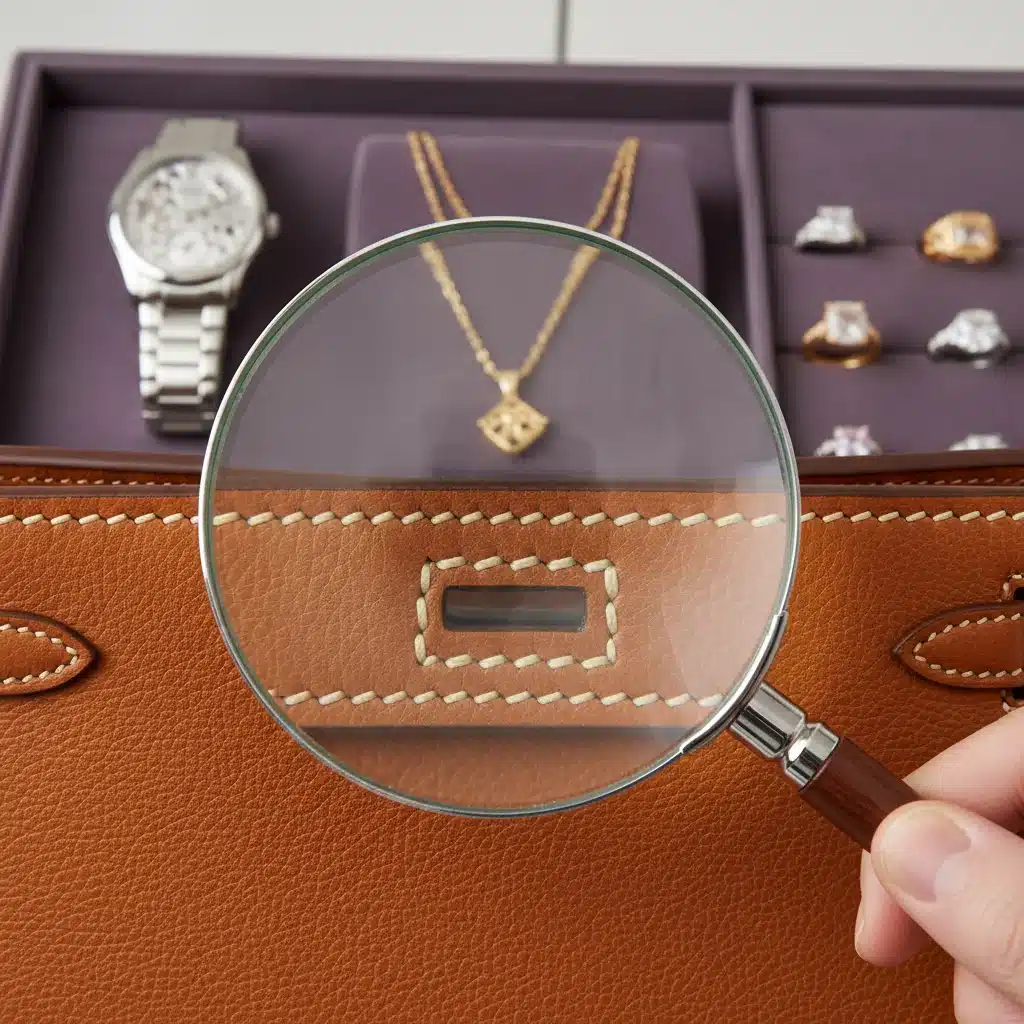
- Consistency: Genuine luxury items will feature perfectly even, uniform stitching. The stitches should be of the same length, perfectly straight, and consistently spaced. Fakes often show irregularities, uneven tension, or loose threads.
- Thread Quality: High-end brands use durable, high-quality threads that match the item’s overall aesthetic. Counterfeit items might use cheaper, weaker threads that fray easily or appear shiny and synthetic.
- Edge Finishing: Examine the edges of leather goods. Authentic items often have meticulously painted, burnished, or rolled edges, which are smooth and durable. Fakes might have rough, unfinished, or poorly painted edges that can chip or peel.
Hardware Quality and Engravings
- Weight and Feel: Authentic luxury hardware (zippers, buckles, clasps, locks) is typically made from solid, high-quality metals, giving it a substantial weight and a smooth, cool-to-the-touch feel. Fakes often use lighter, cheaper alloys that feel hollow or plastic-like.
- Finish: Genuine hardware will have a flawless, consistent finish – whether polished, matte, or brushed. There should be no bubbling, chipping, or discoloration.
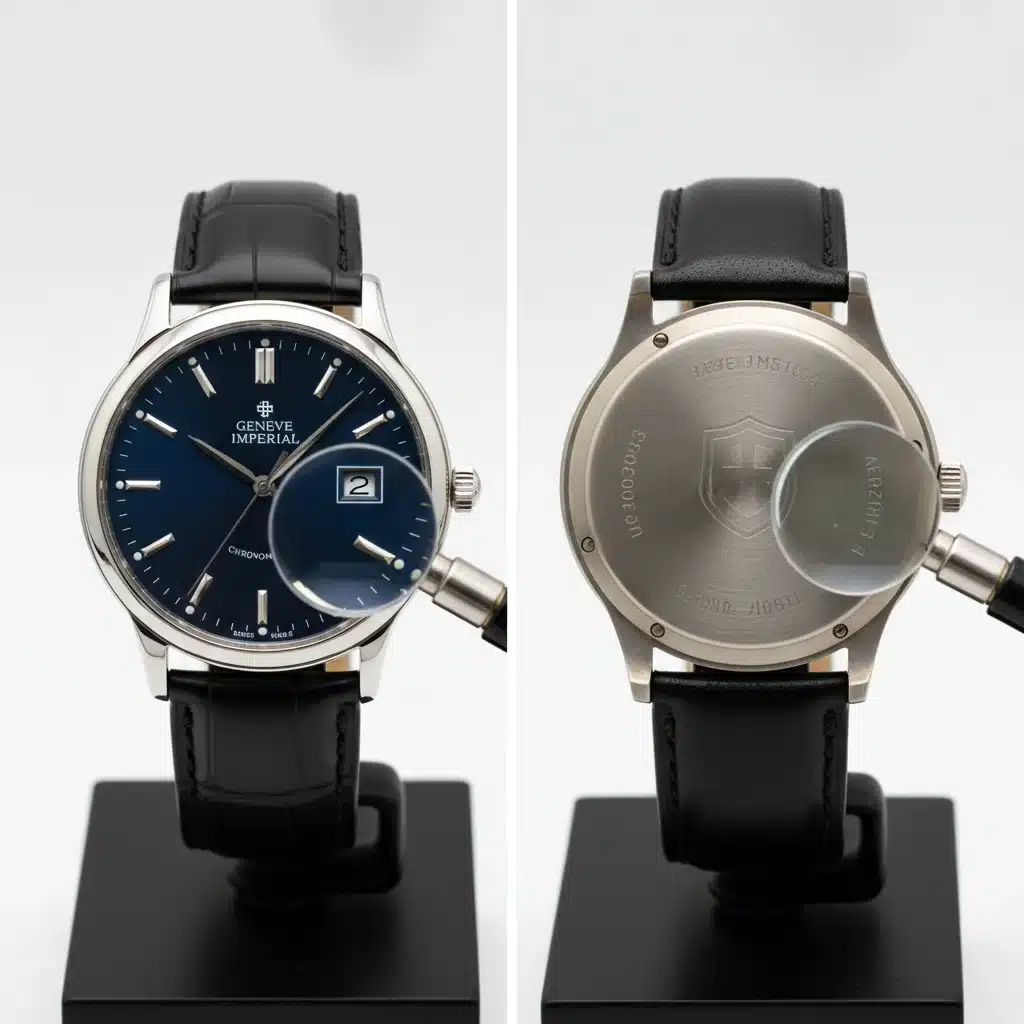
- Engravings and Logos: Examine any engraved or embossed logos and serial numbers. These should be crisp, clear, perfectly aligned, and deeply etched. Fuzzy, shallow, misaligned, or poorly spaced engravings are a strong indicator of a fake. Pay close attention to the font and spacing, as counterfeiters often make subtle errors here.
Interior and Lining
Don’t just focus on the exterior. The interior of a luxury item is just as important. The lining should be made of high-quality material, perfectly fitted without wrinkles or bulges, and often features a brand-specific pattern or texture. Pockets should be well-constructed with neat seams. Any signs of cheap, flimsy, or poorly installed lining are red flags when you’re trying to authenticate luxury items.
2. Assess Material Quality: Touch, Smell, and Durability
The materials used in luxury goods are a cornerstone of their value and durability. Counterfeiters often struggle to replicate the specific feel, smell, and resilience of authentic materials, making this a critical area to inspect when you authenticate luxury items.
Leather Goods
- Texture and Feel: Genuine luxury leather feels supple, soft, and rich to the touch. It often has natural variations and imperfections, which are signs of real leather. Fakes might feel stiff, plastic-like, overly smooth, or have an artificial sheen.
- Smell: Real leather has a distinct, pleasant, earthy aroma. Counterfeit items, especially those made from synthetic materials, often have a chemical, plastic, or glue-like smell.
- Patina: Over time, genuine leather (especially untreated leathers like Louis Vuitton’s Vachetta) develops a unique patina. Fakes will not age in the same way, or their artificial coatings may crack and peel.
Fabrics and Textiles
- Weave and Pattern: High-end fabrics like silk, cashmere, and specific brand-patterned canvases (e.g., Gucci GG canvas, Burberry check) have a particular weave, texture, and color saturation. Examine the consistency of patterns and ensure they align perfectly at seams. Misaligned or distorted patterns are a common sign of a fake.
- Weight and Drape: Luxury fabrics have a certain weight and drape beautifully. Fakes often feel lighter, stiffer, or less fluid.
Precious Metals and Gemstones (for Jewelry and Watches)
- Hallmarks: Genuine jewelry and watches made from precious metals will always have clear, official hallmarks indicating the metal’s purity (e.g., 925 for sterling silver, 750 or 18K for gold, platinum marks).
- Gemstone Quality: Authentic luxury gemstones will exhibit superior brilliance, clarity, and cut. While difficult for an untrained eye, obvious flaws, dullness, or poorly set stones are red flags.
3. Verify Brand Markings and Serial Numbers: The Authenticity Fingerprint
Every luxury brand has specific ways of marking their products with logos, date codes, and serial numbers. These are crucial identifiers when you need to authenticate luxury items.
Logo Placement and Font
- Precision: Brand logos, whether embossed, printed, or stitched, should be perfectly executed. Check for correct font, spacing, size, and alignment. Even a slight deviation can indicate a fake.
- Consistency: Familiarize yourself with the brand’s logo variations over time. Counterfeiters often use outdated or incorrect logo designs.
Date Codes and Serial Numbers
- Location and Format: Many luxury brands (e.g., Louis Vuitton, Chanel, Hermes) use date codes or serial numbers that indicate the manufacturing date and/or location. These codes have a specific format, font, and placement. Research the brand’s current and historical coding systems.
- Matchability: Some brands include serial numbers on authenticity cards that should match a number found on the item itself. Always check for this consistency.
- Absence or Incorrectness: The complete absence of a serial number where one should be, or a number that doesn’t conform to the brand’s known format, is a major red flag.
Authenticity Cards and Packaging
- Quality: While easily faked, authenticity cards, dust bags, and boxes should also reflect luxury quality. Cards should be made of thick, high-quality paper with crisp printing. Dust bags should be made of soft, durable fabric with well-executed logos.
- Information: Check for correct spelling, grammar, and accurate brand information on all packaging materials.
4. Research the Seller and Purchase Location: Source Matters
Where you buy a luxury item is almost as important as the item itself. The source can significantly increase or decrease the likelihood of encountering a fake. This step is critical to proactively authenticate luxury items.
Authorized Retailers and Boutiques
The safest way to guarantee authenticity is to purchase directly from an authorized brand boutique or an official online retailer. These channels guarantee the item’s legitimacy.
Reputable Resellers and Consignment Shops
- Due Diligence: If buying from the secondary market, choose reputable resellers with a strong track record of authentication. Look for businesses that offer guarantees of authenticity, have transparent return policies, and employ expert authenticators.
- Reviews and Reputation: Check customer reviews, testimonials, and any accreditation they might have. A well-established reseller often has a physical presence or a highly transparent online platform.
Online Marketplaces and Private Sellers
- Extreme Caution: These platforms are rife with counterfeits. Be extremely wary.
- Seller History: Look at the seller’s ratings, reviews, and how long they’ve been selling. A new seller with many high-value luxury items at suspiciously low prices is a red flag.
- Product Photos: Demand clear, high-resolution photos from multiple angles, including close-ups of details like stitching, hardware, and serial numbers. If the seller uses stock photos or blurry images, proceed with extreme caution.
- Pricing: If a deal seems too good to be true, it almost certainly is. Luxury items rarely go for steep discounts unless they are pre-owned and show significant wear.
5. Understand the Brand’s Specific Quirks and Evolution
Each luxury brand has its unique characteristics, design philosophies, and even manufacturing variations that evolve over time. Becoming familiar with these nuances is a powerful tool to authenticate luxury items.
Brand-Specific Features
- Signature Details: Research specific details unique to the brand and model you’re interested in. For example, specific zipper brands (e.g., Lampo, YKK for some brands), particular types of closures, or interior tags.
- Production Variations: Be aware that even genuine items can have slight variations depending on the year of production, the factory, or the specific collection. Reputable authenticators are knowledgeable about these subtle differences.
Historical Changes
Brands sometimes change their logos, materials, or even date code systems. A thorough understanding of a brand’s history can help you identify inconsistencies. For instance, a vintage item should not have modern branding elements. Accessing brand archives or collector forums can provide valuable insights.
6. Leverage Professional and Digital Authentication Services
When in doubt, or for high-value purchases, professional authentication is the most reliable method to authenticate luxury items. The landscape of authentication is also evolving with technology.
Third-Party Authentication Services
- Expertise: Several reputable companies specialize in authenticating luxury goods. They employ trained experts who use a combination of visual inspection, tactile examination, and extensive brand knowledge to verify authenticity.
- Certification: Many services provide a certificate of authenticity, which can be valuable for resale or insurance purposes.
- Cost-Benefit: While these services come with a fee, it’s a small price to pay for peace of mind, especially when dealing with significant investments.
Emerging Digital Authentication Technologies (2026 Focus)
The future of luxury authentication increasingly involves technology. As we move into 2026, expect to see more widespread adoption of:
- NFC/RFID Tags: Many brands are embedding Near Field Communication (NFC) or Radio-Frequency Identification (RFID) chips into their products. These can be scanned with a smartphone to verify authenticity and access product information directly from the brand’s database.
- Blockchain Technology: Some innovative brands are using blockchain to create an immutable digital ledger for each product, tracking its origin, ownership, and authenticity. This provides a transparent and tamper-proof record.
- AI-Powered Authentication: Artificial intelligence and machine learning algorithms are being developed to analyze high-resolution images of luxury items, identifying subtle discrepancies that even human eyes might miss. These tools can compare an item’s features against vast databases of genuine and counterfeit products.
- Micro-Engravings and Holograms: Advanced security features like microscopic engravings, unique molecular markers, or sophisticated holograms are becoming more common, making replication extremely difficult for counterfeiters.
When purchasing luxury items, inquire if the brand or seller utilizes any of these digital authentication methods. This adds an extra layer of security to help you confidently authenticate luxury items.
Putting It All Together: A Holistic Approach to Authentication
No single check is foolproof on its own. The most effective way to authenticate luxury items is to combine all six critical checks into a comprehensive strategy. Think of it as building a case – the more evidence you gather, the stronger your conclusion will be.
Before You Buy:
- Research the Item: Understand the specific model, its features, and any brand-specific quirks.
- Research the Seller: Ensure they are reputable and have a transparent authentication process.
- Gather Information: Ask for detailed photos and any available authenticity documentation.
Upon Inspection (In-Person or via Detailed Photos):
- Craftsmanship: Examine stitching, seams, edge finishing, and hardware for perfection.
- Material Quality: Assess the feel, smell, and appearance of leathers, fabrics, and metals.
- Brand Markings: Verify logos, date codes, and serial numbers against known authentic examples.
Final Steps:
- Professional Opinion: If still unsure, consult a third-party authentication service.
- Digital Verification: Utilize any available NFC/RFID or blockchain verification tools.
The Economic and Ethical Impact of Counterfeits
Beyond the personal financial risk, buying counterfeit goods has broader implications. The counterfeit industry is often linked to organized crime, child labor, and unsafe working conditions. It also harms legitimate businesses, stifles innovation, and can even pose health and safety risks (e.g., fake cosmetics or pharmaceuticals). By choosing to authenticate luxury items and only purchasing genuine products, you are not only protecting yourself but also supporting ethical business practices and the integrity of the luxury industry.
Conclusion: Empowering Your Luxury Purchases
The journey of acquiring luxury items should be one of joy and confidence, not anxiety over authenticity. By diligently applying these six critical checks – scrutinizing craftsmanship, assessing material quality, verifying brand markings, researching the seller, understanding brand specifics, and leveraging professional and digital authentication – you can significantly reduce your risk of falling victim to counterfeits. As the market evolves, so too must our vigilance. Staying informed about new authentication technologies and best practices will empower you to confidently authenticate luxury items in 2026 and for many years to come.
Remember, true luxury is about quality, heritage, and integrity. Invest wisely, shop smartly, and enjoy the unparalleled satisfaction that comes with owning a truly authentic piece.