
Seoul Meets States: A Deep Dive into K-Drama’s U.S. Culture Portrayal
The global entertainment landscape is constantly evolving, with Korean dramas, or K-Dramas, leading the charge in captivating international audiences. Their unique blend of compelling storytelling, high production values, and emotional depth has garnered a massive following worldwide. Now, anticipation is building for the 2026 release of ‘Seoul Meets States’, a K-Drama poised to embark on an ambitious journey: to portray modern U.S. culture through a distinctly Korean lens. This upcoming series is not just another addition to the K-Drama catalog; it represents a significant cultural bridge, offering viewers a fresh perspective on American life while simultaneously showcasing the global reach and interpretive power of Korean television. The success of such an endeavor hinges on its ability to transcend stereotypes and delve into the authentic nuances of U.S. culture, making its portrayal a critical point of discussion for fans and critics alike.
The fascination with how different cultures perceive and represent one another is perennial. For decades, Western media has often depicted East Asian cultures, sometimes with varying degrees of accuracy and sensitivity. The tables are turning, and with K-Dramas like ‘Seoul Meets States,’ we are witnessing a powerful new wave of cultural exchange where Eastern perspectives illuminate Western societies. This shift is not merely about reversing the gaze; it’s about fostering a more complex and multifaceted understanding of global identities. As ‘Seoul Meets States’ prepares for its debut, questions abound: How accurately will it capture the diverse tapestry of American life? What aspects of U.S. culture will it choose to highlight? And what impact will this K-Drama’s interpretation of U.S. culture have on its vast global audience, many of whom may have limited direct exposure to American society?
This article will delve into the exciting premise of ‘Seoul Meets States,’ examining the challenges and opportunities inherent in a K-Drama’s portrayal of U.S. culture. We will explore the historical context of cultural representation in media, analyze the specific elements of modern American life that the series is likely to address, and discuss the broader implications of such a cross-cultural narrative. By scrutinizing the potential impact and artistic choices behind ‘Seoul Meets States,’ we aim to provide a comprehensive review of what this groundbreaking K-Drama could mean for international storytelling and cultural understanding. Understanding the nuances of K-Drama U.S. culture portrayal is key to appreciating its depth.
The Cultural Lens: Why K-Dramas Are Tackling U.S. Culture Now
The decision by Korean production houses to specifically focus on U.S. culture in a major K-Drama like ‘Seoul Meets States’ is a testament to several evolving trends in global entertainment. Firstly, the immense popularity of K-Dramas has given Korean creators the confidence and resources to tackle more ambitious and internationally-focused narratives. They are no longer solely catering to a domestic audience but are keenly aware of their global viewership, which includes a significant demographic in Western countries, particularly the United States.
Secondly, there’s a growing appetite for authentic and diverse cultural representations. Audiences worldwide are tired of homogenized narratives and are actively seeking stories that reflect the rich tapestry of human experience. A K-Drama exploring U.S. culture offers a fresh, outside-in perspective that can highlight aspects often overlooked or taken for granted by internal narratives. This external viewpoint can lead to insightful observations and even gentle critiques that resonate with both American and international viewers, contributing to a more nuanced understanding of K-Drama U.S. culture dynamics.
Furthermore, the increasing interconnectedness of the world through digital media and social platforms means that cultural exchange is happening at an unprecedented rate. Young Koreans are often exposed to U.S. pop culture through music, films, and internet trends, and vice versa. This shared cultural space creates a fertile ground for stories that explore the intersections and divergences between these two influential cultures. ‘Seoul Meets States’ is perfectly positioned to capitalize on this curiosity, offering a narrative that speaks to a generation fluent in global cultural references. The series can explore how American values, lifestyles, and societal structures are perceived and integrated, or sometimes misunderstood, by someone from a different cultural background, thus enriching the portrayal of K-Drama U.S. culture.
Finally, the creative freedom and innovative storytelling techniques characteristic of K-Dramas allow for a unique approach to such a sensitive topic. Unlike some traditional Western media, K-Dramas often excel at blending genres, incorporating social commentary with poignant personal stories, and exploring complex emotional landscapes. This narrative flexibility could enable ‘Seoul Meets States’ to tackle challenging aspects of U.S. culture – from its diverse demographics and political climate to its social issues and economic realities – with a depth and sensitivity that might surprise some viewers. The opportunity to present a multifaceted view of K-Drama U.S. culture is immense.
The strategic timing of ‘Seoul Meets States’ in 2026 also suggests that producers have had ample time to research and craft a narrative that aims for authenticity. This careful consideration is crucial for a project that seeks to portray a foreign culture, especially one as vast and varied as the United States. The series is likely to leverage a team of researchers, writers, and cultural consultants to ensure that its depiction of U.S. culture is not only engaging but also respectful and accurate, avoiding the pitfalls of superficiality or caricature. This commitment to authenticity will be a defining factor in how well the K-Drama U.S. culture portrayal is received globally.
Navigating the Nuances: What ‘Seoul Meets States’ Might Explore in U.S. Culture
The United States is a vast and incredibly diverse nation, making the task of portraying its culture a complex one. ‘Seoul Meets States’ will likely face the challenge of deciding which facets of U.S. culture to emphasize, and how to do so without falling into stereotypes. Based on common K-Drama themes and general perceptions of American life, several key areas are ripe for exploration.
Diversity and Identity
One of the most defining characteristics of modern U.S. culture is its immense diversity. The show will likely feature a multicultural cast of American characters, reflecting the various ethnic, racial, and socio-economic backgrounds that make up the country. This could offer a rich tapestry of interactions, highlighting both the challenges and strengths that arise from such a melting pot. How a Korean protagonist navigates these different identities, and how their own identity is shaped by their experiences in the U.S., could form a compelling narrative arc. The series might explore themes of immigration, cultural assimilation, and the search for belonging, which are deeply resonant in both Korean and American societies. This exploration of diverse identities is crucial for an authentic K-Drama U.S. culture depiction.
Work-Life Balance and Career Aspirations
K-Dramas often delve into themes of career ambition, corporate culture, and the pressures of modern work life. When depicting U.S. culture, ‘Seoul Meets States’ could explore the differences in work ethics, corporate structures, and the pursuit of professional success between the two countries. For instance, the perception of individualism versus collectivism in the workplace, the emphasis on work-life balance (or lack thereof), and the entrepreneurial spirit prevalent in the U.S. could all be significant plot points. The series might contrast the intense, often hierarchical, work environment sometimes depicted in Korean dramas with the more flexible, yet equally demanding, American professional landscape, offering insightful commentary on K-Drama U.S. culture work dynamics.
Social Dynamics and Relationships
Relationships are the bedrock of any K-Drama, and ‘Seoul Meets States’ will undoubtedly focus on how interpersonal dynamics play out in a U.S. setting. This could include exploring dating culture, friendships, family structures, and community bonds. The series might highlight differences in communication styles, social etiquette, and emotional expression. For example, the directness often associated with American communication versus the more indirect approach in Korean culture could lead to humorous or poignant misunderstandings. Similarly, the concept of personal space, the role of extended family, and the formation of social circles could be fascinating areas for the show to explore, offering a comparative look at K-Drama U.S. culture social norms.

Pop Culture and Lifestyle
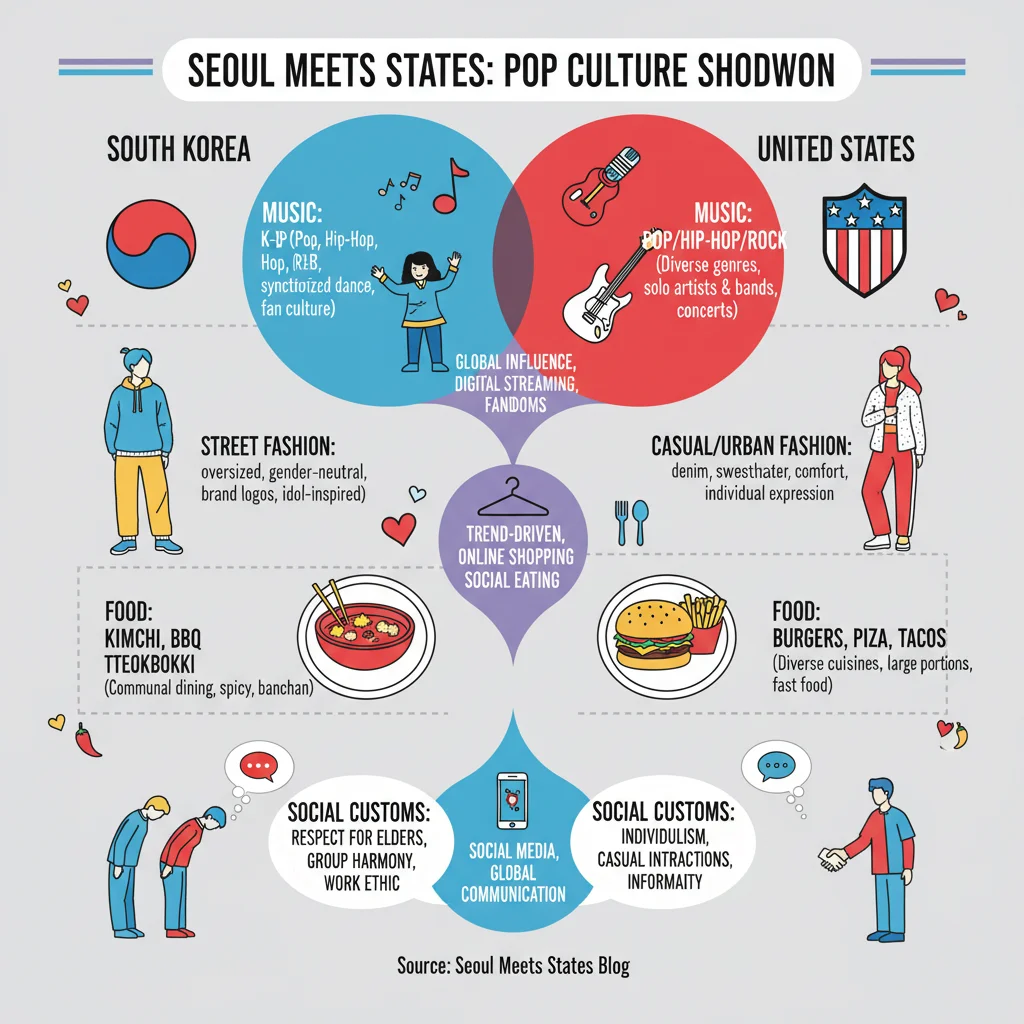
U.S. pop culture has a global footprint, and ‘Seoul Meets States’ will likely engage with it directly. This could involve references to American music, movies, fashion, sports, and food trends. The series might show how these cultural elements are consumed and interpreted by its Korean characters, and how they might differ from their Korean counterparts. Beyond pop culture, the series could also touch upon everyday American lifestyles, such as suburban living, urban experiences, road trip culture, and regional differences. These details, when accurately portrayed, can add significant depth and authenticity to the K-Drama U.S. culture narrative, making it more relatable for international viewers.
Political and Social Issues
While K-Dramas often shy away from overt political commentary, they frequently weave social issues into their narratives. ‘Seoul Meets States’ might subtly address contemporary American social issues such as economic inequality, healthcare, gun control, environmental concerns, or racial justice movements. These topics, if handled with sensitivity and nuance, could provide a deeper understanding of the challenges and aspirations within U.S. society. The series could explore how these issues impact the lives of ordinary Americans and how a newcomer might perceive or react to them. Such an approach would elevate the K-Drama U.S. culture portrayal beyond mere superficial observations.
Challenges and Opportunities in Cross-Cultural Storytelling
Creating a K-Drama that accurately and respectfully portrays a foreign culture like that of the United States comes with its own set of challenges and immense opportunities. The production team behind ‘Seoul Meets States’ will need to navigate these carefully to ensure the series achieves its full potential.
Avoiding Stereotypes and Generalizations
One of the primary challenges is to avoid falling into the trap of stereotypes. The U.S. is not a monolith, and relying on simplistic generalizations can alienate viewers and undermine the credibility of the narrative. The opportunity here lies in presenting a multifaceted view, showcasing the regional differences, diverse perspectives, and individual complexities that define American life. This requires meticulous research, consultation with American cultural experts, and a commitment to portraying characters as individuals rather than archetypes. A nuanced K-Drama U.S. culture depiction will steer clear of clichés.
Language and Communication Barriers
Language will undoubtedly be a central theme. How will the Korean protagonists navigate English? Will the show incorporate code-switching, language learning arcs, or rely heavily on subtitles? The way language barriers are depicted can add authenticity and humor, but also highlight the difficulties of cross-cultural communication. This presents an opportunity to explore non-verbal cues, cultural misunderstandings arising from linguistic differences, and the eventual bridging of these gaps through effort and empathy, enriching the K-Drama U.S. culture narrative.
Cultural Sensitivity and Authenticity
Ensuring cultural sensitivity is paramount. This goes beyond avoiding offensive portrayals and extends to accurately capturing the subtle nuances of daily life, traditions, and values. Authenticity can be achieved through on-location filming, careful set design, realistic dialogue, and casting actors who genuinely represent the communities being depicted. The opportunity here is to create a show that feels genuinely immersive for both Korean and international audiences, fostering a deeper appreciation for U.S. culture. The success of K-Drama U.S. culture portrayal hinges on this sensitivity.
Bridging Cultural Gaps for a Global Audience
The biggest opportunity for ‘Seoul Meets States’ is its potential to act as a powerful tool for cultural diplomacy and understanding. By presenting U.S. culture through a fresh, engaging, and often empathetic lens, the K-Drama can introduce aspects of American life to millions of viewers who might otherwise only encounter it through news headlines or sensationalized news. Similarly, it can offer American viewers a chance to see their own culture reflected back to them, perhaps highlighting aspects they hadn’t considered. This bidirectional cultural exchange is invaluable in an increasingly globalized world, making the K-Drama U.S. culture dialogue more robust.
The Impact of ‘Seoul Meets States’ on Global Entertainment
The release of ‘Seoul Meets States’ in 2026 holds significant implications not just for K-Drama fans, but for the broader landscape of global entertainment and cultural exchange. Its success or failure in accurately and engagingly portraying U.S. culture could set new precedents for how international productions approach cross-cultural narratives.
Redefining International Storytelling
If ‘Seoul Meets States’ manages to deliver a nuanced and authentic depiction of U.S. culture, it could redefine expectations for international storytelling. It would demonstrate that compelling narratives can emerge from unexpected cultural pairings, challenging the traditional flow of media influence from West to East. This could inspire more productions from non-Western countries to explore Western cultures, leading to a richer and more diverse array of global content. Such a shift would contribute significantly to the evolution of K-Drama U.S. culture narratives.
Fostering Cultural Empathy and Understanding
At its heart, good storytelling fosters empathy. By presenting American characters and their experiences through a Korean perspective, ‘Seoul Meets States’ has the potential to build bridges of understanding between different cultures. Viewers in Korea and other parts of the world might gain a more personal and relatable insight into the lives of Americans, moving beyond political rhetoric or sensationalized news. Conversely, American audiences might find a unique reflection of their own society, prompting self-reflection and perhaps even challenging preconceived notions about how they are perceived globally. This mutual understanding is a powerful outcome of effective K-Drama U.S. culture portrayal.
Economic and Industry Implications
The economic impact of a successful ‘Seoul Meets States’ could be substantial. It could further boost the global demand for K-Dramas, leading to increased investment in Korean productions and fostering more international collaborations. This could also open doors for American actors, writers, and crew members to participate in Korean-led projects, creating a more interconnected and collaborative global entertainment industry. The financial success would underscore the viability of exploring diverse cultural themes, further solidifying the K-Drama U.S. culture market.
Setting a New Bar for Accuracy and Research
The pressure on ‘Seoul Meets States’ to deliver an accurate portrayal of U.S. culture will likely force production teams to invest heavily in research and cultural consultation. If successful, this could set a new standard for accuracy and authenticity in cross-cultural productions, encouraging other creators to move beyond superficial depictions. This commitment to detail would elevate the quality of international content and ensure that cultural representations are handled with the respect and diligence they deserve, enhancing the credibility of K-Drama U.S. culture narratives.
Inspiring Future Collaborations
Ultimately, ‘Seoul Meets States’ could serve as a blueprint for future international collaborations. Its success might encourage more co-productions between Korean and American studios, leading to hybrid storytelling that blends the best of both worlds. Imagine K-Dramas set in other Western countries, or American series incorporating more East Asian cultural elements. The possibilities are endless, and ‘Seoul Meets States’ could be a pivotal moment in accelerating this trend, expanding the horizons of K-Drama U.S. culture interactions.
Conclusion: Anticipating the K-Drama U.S. Culture Phenomenon
The upcoming K-Drama ‘Seoul Meets States’ stands at the precipice of a significant cultural moment. Its ambitious premise – to portray modern U.S. culture through a Korean narrative lens – offers a unique opportunity to bridge cultural divides, challenge perceptions, and enrich the global entertainment landscape. The series has the potential to be more than just a popular show; it could become a crucial touchstone for cross-cultural understanding in the 21st century. By exploring the nuances of American life, from its vibrant diversity and complex social dynamics to its distinct work culture and pop culture footprint, ‘Seoul Meets States’ can provide a fresh and insightful perspective that resonates with audiences worldwide.
The challenges are undeniable, particularly in avoiding stereotypes and ensuring authenticity. However, the opportunities for fostering empathy, redefining international storytelling, and setting new standards for cultural accuracy are even greater. As global audiences increasingly seek out diverse and meaningful content, ‘Seoul Meets States’ is perfectly positioned to meet this demand, offering a compelling narrative that is both entertaining and thought-provoking. Its success will not only solidify the global dominance of K-Dramas but also pave the way for a more interconnected and culturally rich future in media.
We eagerly anticipate the premiere of ‘Seoul Meets States’ in 2026, ready to witness how this groundbreaking K-Drama will interpret and present the multifaceted tapestry of U.S. culture. It promises to be a series that sparks conversation, broadens horizons, and ultimately, brings the world a little closer together through the power of storytelling. The anticipation around the K-Drama U.S. culture portrayal is a testament to the evolving power of global media.