Mastering Agile Development: A Comprehensive Guide for Success

Mastering Agile Development: A Comprehensive Guide for Success
In today’s fast-paced business environment, the ability to adapt quickly and deliver value efficiently is paramount. This is where agile development guide principles and methodologies come into play. Agile has transformed how teams approach project management, especially in software development, by emphasizing iterative progress, collaboration, and continuous improvement. This comprehensive guide will delve deep into the world of agile development, exploring its core tenets, popular frameworks, and best practices to help you achieve unparalleled success in your projects.
What is Agile Development? Understanding the Core Philosophy
At its heart, agile development is an iterative approach to project management and software development that helps teams deliver value to their customers faster and with fewer headaches. Instead of a ‘big bang’ launch, agile promotes continuous iteration of development and testing throughout the software development lifecycle. The agile philosophy is rooted in the Agile Manifesto, which was created in 2001 by seventeen independent-minded software practitioners. This manifesto outlines four core values and twelve supporting principles that guide agile teams.
The Four Core Values of the Agile Manifesto:
- Individuals and Interactions over Processes and Tools: While processes and tools are important, agile prioritizes the people and how they communicate and collaborate. Effective communication fosters a more productive and adaptive environment.
- Working Software over Comprehensive Documentation: The primary measure of progress in agile is working software. While documentation is necessary, it should be concise and serve the purpose of enabling the team to build and deliver the product.
- Customer Collaboration over Contract Negotiation: Agile emphasizes continuous engagement with the customer to ensure the product being built truly meets their needs. This collaborative approach leads to better outcomes than rigid contract negotiations.
- Responding to Change over Following a Plan: In a dynamic world, requirements can change. Agile embraces change as an opportunity to deliver a better product, rather than seeing it as a deviation from a fixed plan.
The Twelve Principles Behind the Agile Manifesto:
These principles provide further guidance on how to implement the agile values:
- Our highest priority is to satisfy the customer through early and continuous delivery of valuable software.
- Welcome changing requirements, even late in development. Agile processes harness change for the customer’s competitive advantage.
- Deliver working software frequently, from a couple of weeks to a couple of months, with a preference to the shorter timescale.
- Business people and developers must work together daily throughout the project.
- Build projects around motivated individuals. Give them the environment and support they need, and trust them to get the job done.
- The most efficient and effective method of conveying information to and within a development team is face-to-face conversation.
- Working software is the primary measure of progress.
- Agile processes promote sustainable development. The sponsors, developers, and users should be able to maintain a constant pace indefinitely.
- Continuous attention to technical excellence and good design enhances agility.
- Simplicity—the art of maximizing the amount of work not done—is essential.
- The best architectures, requirements, and designs emerge from self-organizing teams.
- At regular intervals, the team reflects on how to become more effective, then tunes and adjusts its behavior accordingly.
Understanding these foundational elements is crucial for anyone looking to truly master an agile development guide. It’s not just about applying a specific framework; it’s about adopting a mindset that values flexibility, customer satisfaction, and continuous improvement.
Popular Agile Frameworks: Scrum, Kanban, and Beyond
While agile is a philosophy, several frameworks have emerged to put its principles into practice. The most widely adopted are Scrum and Kanban, each with its unique strengths and applications.
Scrum: The Most Popular Agile Framework
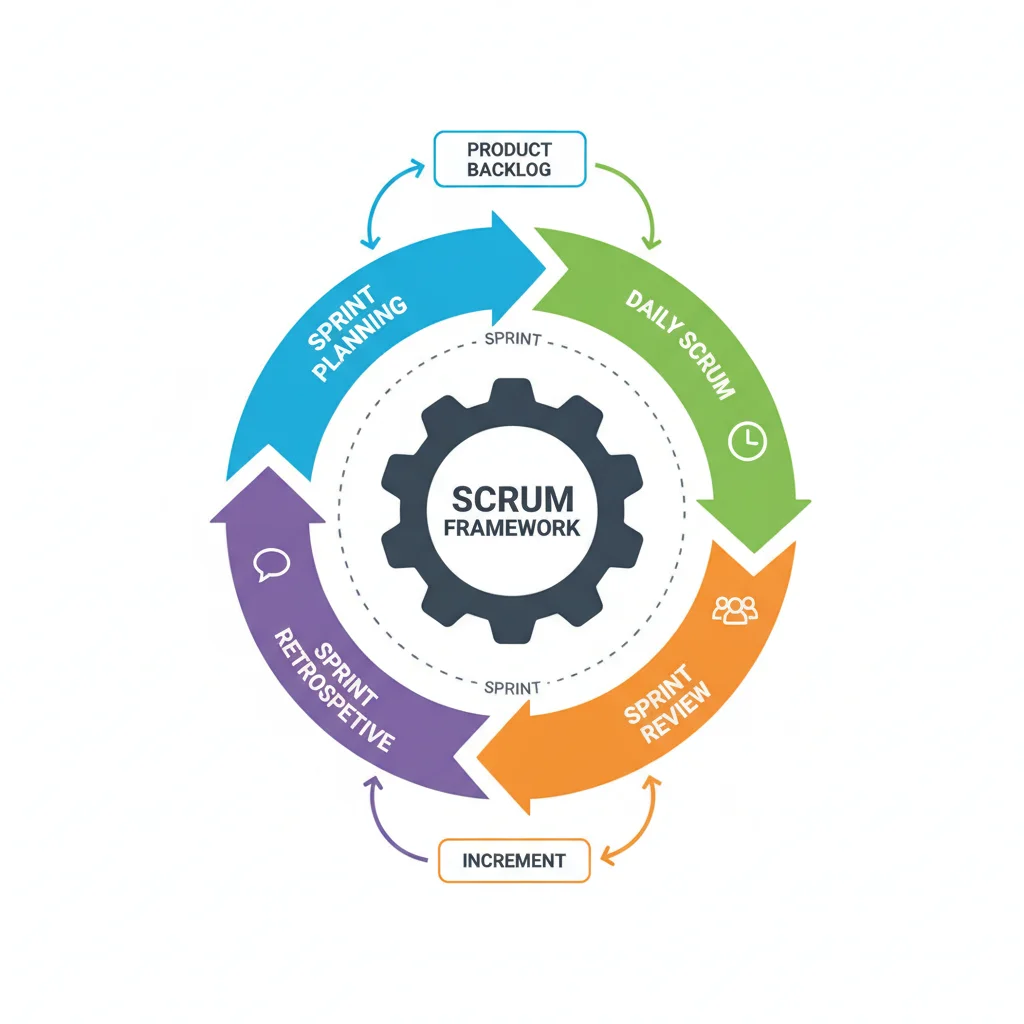
Scrum is an iterative and incremental agile framework for managing product development. It organizes work into short, time-boxed iterations called ‘sprints’, typically lasting one to four weeks. Each sprint aims to deliver a potentially shippable increment of the product.
Key Roles in Scrum:
- Product Owner: Responsible for maximizing the value of the product and the work of the Development Team. They manage the Product Backlog.
- Scrum Master: Facilitates the Scrum process and ensures the team adheres to Scrum values and practices. They remove impediments and coach the team.
- Development Team: A self-organizing, cross-functional group of professionals who do the work of delivering a product increment.
Key Events in Scrum:
- Sprint Planning: The team plans the work to be performed in the upcoming sprint.
- Daily Scrum (Stand-up): A short daily meeting for the Development Team to synchronize activities and create a plan for the next 24 hours.
- Sprint Review: The Development Team presents the work done during the sprint to stakeholders and receives feedback.
- Sprint Retrospective: The team inspects how the last sprint went with regard to people, relationships, process, and tools, and identifies improvements.
Key Artifacts in Scrum:
- Product Backlog: An ordered list of everything that might be needed in the product.
- Sprint Backlog: The set of Product Backlog items selected for the Sprint, plus the plan for delivering the product increment and realizing the Sprint Goal.
- Increment: The sum of all the Product Backlog items completed during a Sprint and the value of the increments of all previous Sprints.
Scrum’s structured yet flexible nature makes it an excellent choice for complex projects where requirements may evolve. Our agile development guide emphasizes that understanding these elements is crucial for effective Scrum implementation.
Kanban: Visualizing Workflow
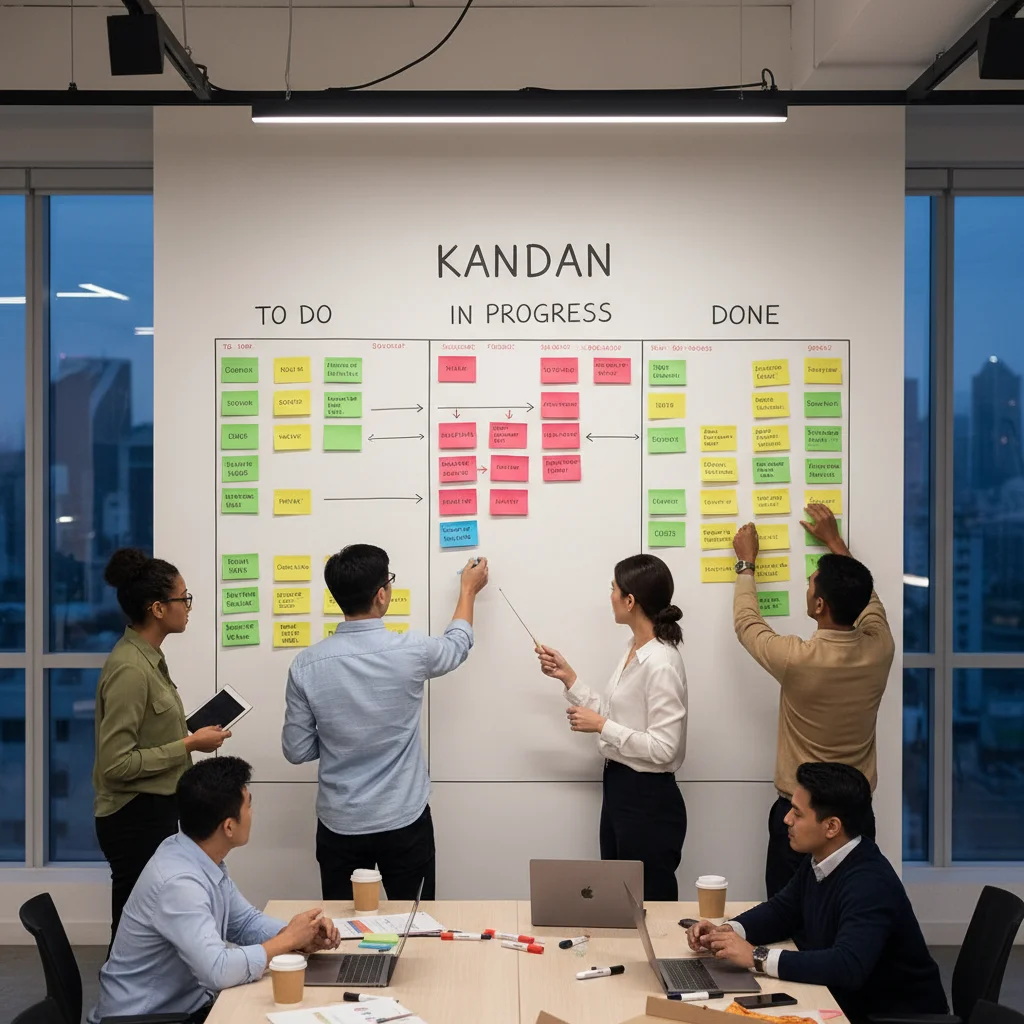
Kanban, originating from Japanese manufacturing, is another powerful agile methodology. It focuses on visualizing workflow, limiting work in progress (WIP), and maximizing efficiency. Unlike Scrum’s time-boxed sprints, Kanban is a continuous flow system.
Key Principles of Kanban:
- Visualize the Workflow: Use a Kanban board (physical or digital) to represent different stages of work and the items moving through them.
- Limit Work in Progress (WIP): Set limits on the number of items that can be in each workflow stage to prevent bottlenecks and ensure focus.
- Manage Flow: Monitor and improve the flow of work, identifying and addressing any blockages or delays.
- Make Process Policies Explicit: Clearly define the rules and criteria for moving work items from one stage to the next.
- Implement Feedback Loops: Regularly review the process and make adjustments based on feedback and performance data.
- Improve Collaboratively, Evolve Experimentally: Foster a culture of continuous improvement through shared understanding and data-driven decisions.
Kanban is particularly effective for maintenance projects, operational teams, or any scenario where work arrives unpredictably and needs to be processed continuously. It provides a clear visual of the workflow, making it easy to identify inefficiencies and improve throughput. This agile development guide suggests Kanban for teams needing flexibility without strict timeboxes.
Other Agile Methodologies: Lean, XP, and Crystal
- Lean Software Development: Focuses on minimizing waste, maximizing customer value, and continuous improvement. It draws heavily from Lean manufacturing principles.
- Extreme Programming (XP): Emphasizes technical practices like pair programming, test-driven development (TDD), continuous integration, and frequent releases.
- Crystal: A family of agile methodologies, each tailored to different project characteristics (e.g., Crystal Clear, Crystal Yellow). It prioritizes people, communication, and adaptability over processes and tools.
Implementing Agile Successfully: Best Practices and Challenges
Successfully adopting agile isn’t just about choosing a framework; it requires a cultural shift and adherence to certain best practices. Our agile development guide would be incomplete without addressing these critical aspects.
Best Practices for Agile Implementation:
- Start Small and Scale Gradually: Don’t try to implement agile across your entire organization overnight. Begin with a pilot project or a small team, learn from the experience, and then gradually expand.
- Foster a Culture of Trust and Transparency: Agile thrives on open communication and trust among team members and with stakeholders. Transparency in progress, challenges, and decisions is vital.
- Empower Self-Organizing Teams: Give teams the autonomy to decide how best to accomplish their work. Self-organization leads to increased ownership, motivation, and innovative solutions.
- Prioritize Relentlessly: A clear, prioritized backlog is essential. The team should always be working on the most valuable items first.
- Embrace Continuous Feedback: Regular feedback loops—from daily stand-ups to sprint reviews and retrospectives—are crucial for identifying issues early and making timely adjustments.
- Invest in Training and Coaching: Provide adequate training for team members, Scrum Masters, and Product Owners. Consider bringing in experienced agile coaches to guide the transition.
- Automate Where Possible: Automate repetitive tasks like testing, building, and deployment to speed up the development cycle and reduce errors. This aligns with the ‘continuous integration’ aspect often seen in agile practices.
- Focus on Technical Excellence: Maintain high standards for code quality, design, and architecture. Technical debt can quickly undermine agile benefits.
- Measure What Matters: Track metrics that provide insights into team performance, product quality, and customer satisfaction, rather than simply focusing on output.
Common Challenges in Agile Adoption:
- Resistance to Change: People are naturally resistant to new ways of working. Overcoming this requires strong leadership, clear communication, and demonstrating the benefits of agile.
- Lack of Management Support: Without commitment from leadership, agile initiatives often falter. Management needs to understand and champion the agile transformation.
- Inadequate Training: Teams thrown into agile without proper training will struggle to adapt and utilize the methodologies effectively.
- Misunderstanding Agile Principles: Some organizations adopt agile frameworks superficially without embracing the underlying values, leading to ‘faux agile’ or ‘Scrum-but’ scenarios.
- Difficulty in Scaling Agile: Applying agile principles to large, complex organizations with multiple interdependent teams can be challenging and often requires scaled agile frameworks like SAFe, LeSS, or DaD.
- Dealing with Legacy Systems: Integrating agile development with existing legacy systems can be complex and may require significant refactoring or strategic planning.
- Over-reliance on Tools: While tools can be helpful, they are not a substitute for understanding and applying agile principles. Focusing too much on tools can distract from the core values.
Addressing these challenges proactively is key to a successful agile transformation. This agile development guide emphasizes that continuous learning and adaptation are as vital for organizations as they are for agile teams.
The Role of Continuous Integration and DevOps in Agile
As agile development has matured, its synergy with practices like Continuous Integration (CI) and DevOps has become increasingly apparent. These practices extend agile principles beyond the development team, encompassing the entire software delivery pipeline.
Continuous Integration (CI):
CI is a development practice where developers integrate code into a shared repository frequently, preferably several times a day. Each integration is then verified by an automated build and automated tests. This helps in detecting integration errors early and maintaining a healthy codebase. CI is a cornerstone of effective agile delivery, ensuring that working software is always available.
DevOps: Bridging the Gap
DevOps is a set of practices that combines software development (Dev) and IT operations (Ops) to shorten the systems development life cycle and provide continuous delivery with high software quality. It’s about fostering a culture of collaboration, communication, and integration between developers and operations teams. DevOps extends the agile mindset to the entire value stream, from idea to production and beyond.
Key Benefits of Integrating CI/CD and DevOps with Agile:
- Faster Time to Market: Automated pipelines and continuous delivery accelerate the release cycle, getting features to customers quicker.
- Improved Software Quality: Continuous testing and feedback loops help identify and fix defects earlier, leading to more robust software.
- Increased Collaboration: DevOps breaks down silos between development, operations, and other teams, fostering a shared responsibility for product success.
- Enhanced Scalability and Reliability: Automated infrastructure management and monitoring contribute to more stable and scalable systems.
- Reduced Risk: Smaller, more frequent releases reduce the risk associated with large, infrequent deployments.
For a truly effective agile development guide, understanding and implementing CI/CD and DevOps practices is no longer optional; it’s a necessity for achieving sustained agility and competitive advantage.
Measuring Agile Success: Metrics and KPIs
To truly understand if your agile adoption is yielding results, it’s essential to measure progress and performance. However, traditional project metrics often don’t translate well to agile environments. Instead, focus on metrics that reflect agile principles.
Key Agile Metrics and KPIs:
- Velocity: A measure of the amount of work a Scrum team can complete during a sprint. It helps in forecasting future sprints and capacity planning.
- Lead Time: The total time taken from when a customer requests a feature until it’s delivered. A shorter lead time indicates greater efficiency.
- Cycle Time: The time it takes for a work item to go from ‘in progress’ to ‘done’. Optimizing cycle time improves throughput.
- Burn-down/Burn-up Charts: Visual representations of work remaining (burn-down) or work completed (burn-up) in a sprint or release.
- Team Satisfaction: Happy, engaged teams are more productive. Regular surveys and feedback mechanisms can gauge team morale.
- Customer Satisfaction: Ultimately, agile aims to satisfy the customer. Metrics like Net Promoter Score (NPS) or direct feedback can be invaluable.
- Defect Density: The number of defects per unit of code or functionality. Lower defect density indicates higher quality.
- Throughput: The number of work items completed per unit of time. Higher throughput means more value delivered.
- Cumulative Flow Diagram (CFD): A chart that shows the quantity of work in different states over time, providing insights into workflow stability, WIP, and bottlenecks.
It’s important to use these metrics not for individual performance reviews, but for team-level continuous improvement. They serve as feedback mechanisms to help the team inspect and adapt, a core principle of any effective agile development guide.
The Future of Agile: Trends and Evolution
Agile is not static; it’s a constantly evolving field. As technology advances and business needs change, so too do the practices and interpretations of agile. Understanding these trends is vital for anyone looking to stay at the forefront of this methodology.
Emerging Trends in Agile:
- AI and Machine Learning in Agile: AI can assist in predicting sprint velocity, identifying bottlenecks, automating testing, and even generating code suggestions, making agile processes more efficient and intelligent.
- Value Stream Management (VSM): VSM focuses on optimizing the end-to-end flow of value to the customer, from idea conception to delivery and feedback. It provides a holistic view that complements agile’s iterative nature.
- Hybrid Approaches: Many organizations are finding success by blending agile with traditional project management (e.g., ‘Wagile’) or combining elements from different agile frameworks (e.g., ‘Scrumban’). The key is tailoring the approach to fit specific organizational needs.
- Business Agility Beyond IT: Agile principles are increasingly being adopted by non-IT departments like marketing, HR, and finance, recognizing that the need for adaptability and rapid value delivery extends across the entire enterprise.
- Focus on Psychological Safety: Creating an environment where team members feel safe to take risks, admit mistakes, and voice opinions without fear of reprisal is gaining recognition as a critical factor for high-performing agile teams.
- Distributed Agile Teams: With the rise of remote work, managing distributed agile teams effectively has become a key area of focus, requiring enhanced communication tools and strategies.
The future of agile lies in its continued adaptability and its ability to integrate with new technologies and organizational structures. Staying informed about these trends will ensure that your agile development guide remains relevant and effective in the years to come.
Conclusion: Embracing Agility for Enduring Success
Agile development is more than just a set of tools or a methodology; it’s a mindset that prioritizes people, collaboration, adaptability, and continuous delivery of value. By understanding its core principles, adopting appropriate frameworks like Scrum or Kanban, and embracing best practices, organizations can significantly enhance their ability to respond to change, improve product quality, and increase customer satisfaction.
The journey to becoming truly agile is ongoing. It requires commitment, continuous learning, and a willingness to inspect and adapt at every level of the organization. By leveraging this comprehensive agile development guide, you are well-equipped to navigate the complexities of modern project management and steer your teams towards enduring success in an ever-evolving landscape.
Embrace the spirit of agility, empower your teams, and watch as your projects not only meet but exceed expectations, delivering exceptional value to your customers time and time again.